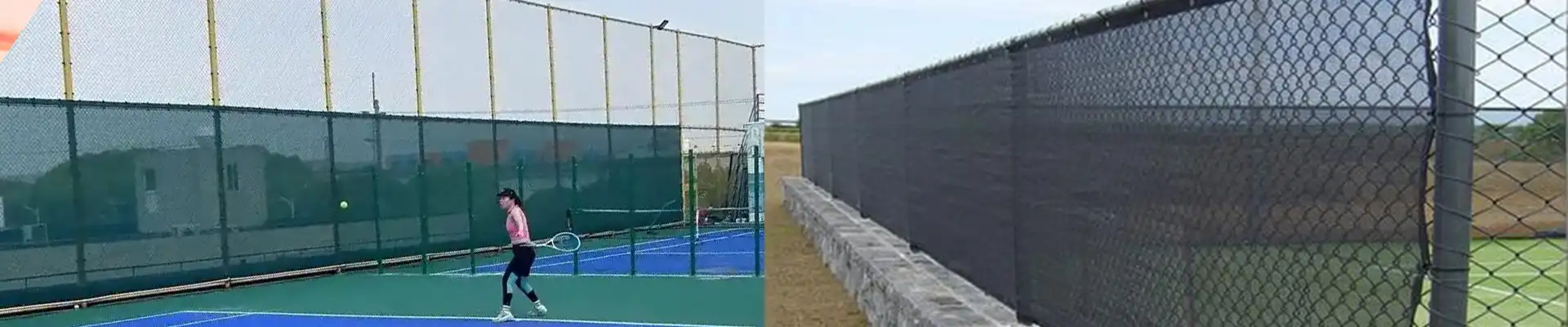
Product positioning: This volleyball netting line is designed for professional competitions, school physical education, club training, and outdoor recreational use. It covers FIVB competition-grade nets, standard training nets, and portable beach/leisure nets, balancing professional performance with flexibility across scenarios.
Product type: Volleyball netting / volleyball net
Main applications: Indoor competition, training, school teaching, beach volleyball, backyard and portable leisure use
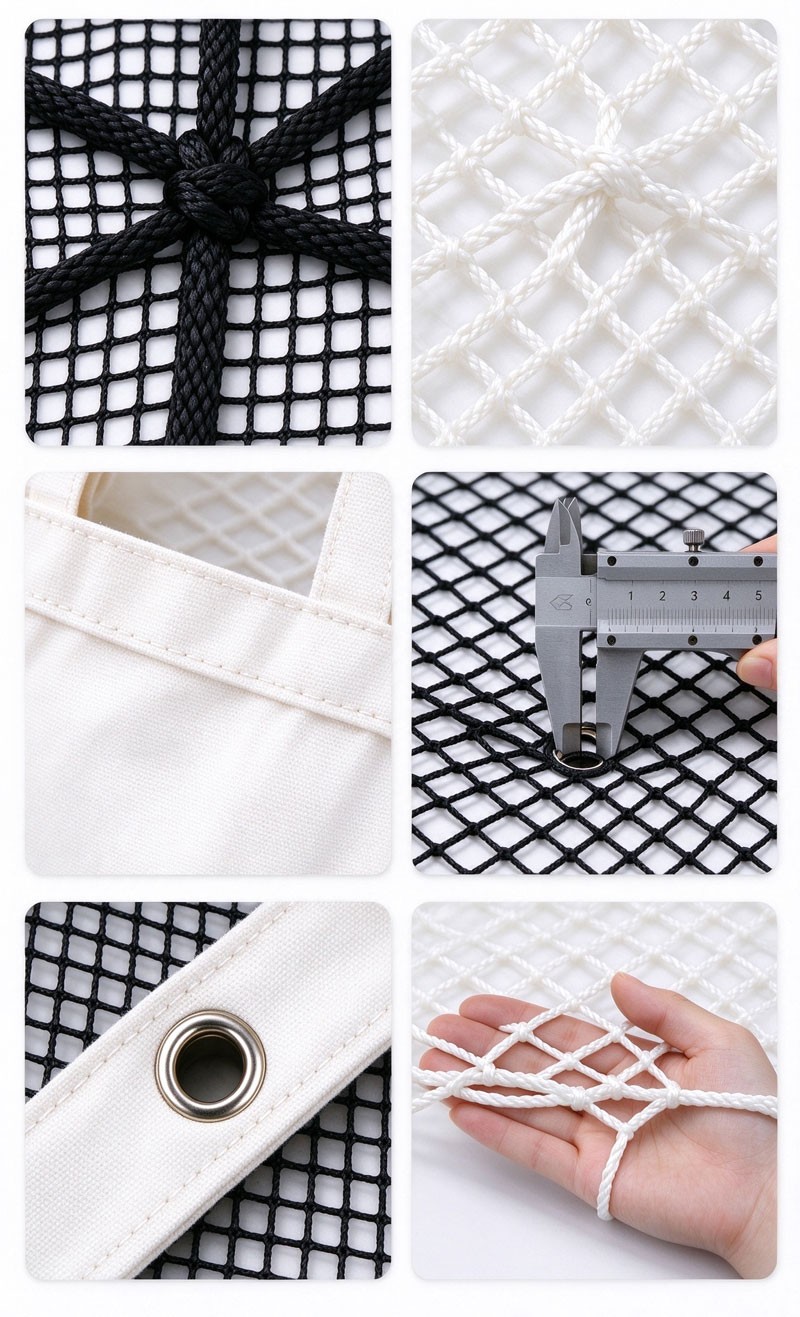
Competition-grade construction: 3 mm HDPE braided net twine, four-row stitched PVC top band, 5 mm PVC-coated steel wire rope
Common indoor net size: 9.50–10.00 m length × 1 m width; some training nets use 0.7 m width
Common mesh size: 10 cm × 10 cm square mesh; 45 mm × 45 mm dense-mesh training options are also available
Beach volleyball net size: FIVB beach volleyball standard net length 8.5 m, width about 1 m (±3 cm), 10 cm square mesh
Net height: Adjusted by the posts, not by the net itself — men’s official competition 2.43 m, women’s 2.24 m; youth and amateur events can be adjusted by level
Volleyball netting specifications should first be matched to the intended use: competition-grade versus training/leisure-grade.
Length: 9.50–10.00 m
Width: Usually 1 m; some training models use 0.7 m
Mesh: 10 cm × 10 cm square mesh as the mainstream option; 45 mm × 45 mm dense-mesh training nets are also available
Net height: Not determined by the net itself. Height is adjusted through the net posts:
Men’s official competition: 2.43 m
Women’s official competition: 2.24 m
Youth and amateur events: adjustable according to level
FIVB beach volleyball standard net length: 8.5 m
Width: About 1 m (±3 cm)
Mesh: 10 cm square mesh
Main difference from indoor nets: Shorter length, suitable for compact sand-court layouts
Material requirement: Stronger weather resistance for outdoor sand-court use
Special length specification: FIVB World and official competitions may use competition nets with an 8.0 m net length
Features: Smaller mesh and branded display areas at the net ends
Typical professional construction:
3 mm braided polyethylene net twine
Four-row stitched PVC top band
5 mm PVC-coated steel wire rope
Purpose: To withstand high-impact spikes and maintain stability under long-term tension
Mainstream volleyball netting uses high-strength polyethylene or nylon braiding. Some training models use PE twisted twine.
Polyethylene (PE): High tensile strength and excellent weather resistance; suitable for long-term indoor and outdoor use.
Nylon: Better elasticity and durability, but relatively higher cost.
Competition-grade products: Commonly use 3 mm HDPE braided net twine, balancing strength and lightweight performance.
Top and bottom edges: Reinforced with thickened wear-resistant Oxford fabric or double-layer PVC canvas.
Top binding width: Usually ≥70 mm.
Bottom binding width: Usually ≥50 mm.
Purpose: Prevent net twine wear and edge curling.
Top edge: Steel wire rope is threaded through the top hem; some products use 5 mm PVC-coated steel wire rope.
Tensioning: A metal tensioner is used to tension and lock the net.
Bottom edge: A pull rope is threaded through the bottom edge to secure the net bottom and keep the net surface flat.
Side support: Fiberglass rods, commonly 16 mm, are built into both ends as side supports, helping the net keep a regular shape after unfolding and resist deformation under load.
For outdoor use, the net body should be oxidation-resistant and UV-resistant. High-quality products should resist fading, embrittlement, and loose knots under long-term sun and rain exposure. The tensioning device should use a metal winch handle with a locking wheel structure, ensuring reliable locking after tightening and preventing the net from loosening during training or matches.
| Scenario | Recommended Specification / Configuration | Selection Key Points |
|---|---|---|
| Professional training / official competition | 9.5–10 m × 1 m, 10 cm mesh, steel wire rope + tensioner | Prefer competition-grade edge binding and 3 mm HDPE net twine to ensure net stability under high-intensity play |
| School teaching / club training | 9.5 m × 0.7 m or 1 m; dense mesh optional | Balance standard compliance and durability; edge binding and steel wire rope configuration should not be omitted |
| Beach volleyball | 8.5 m × 1 m, 10 cm mesh | Length fits sand-court layouts; material should offer stronger weather resistance |
| Leisure / portable / backyard | Short sizes such as 3 m / 5 m; polyester or PE net body | Lightweight and easy to assemble/disassemble; prefer products with portable storage design |
Beach volleyball nets and indoor nets should not be mixed in size. Portable leisure nets focus on low barriers to play and should not be judged by competition-grade precision, but basic guarantees are still required for edge-binding firmness and tensioning reliability. If training nets need to accommodate lighter ball types such as light volleyball, pay attention to the match between mesh density and net twine flexibility.
When selecting or inspecting volleyball netting, check the following details:
Mesh alignment: Mesh rows should be basically parallel to the edge bands.
Splices: No more than two visible splices per net.
Stitching: Neat stitching, with no skipped or dropped stitches.
Edge binding: Folded edge overlap deviation should be controlled within a small tolerance.
Color and appearance: Uniform color; no mold, discoloration, or stains.
Competition-grade products: Confirm that the tensioner locks reliably and does not self-loosen; side fiberglass rods should be straight without bending.
Net surface: The net should remain flat and stable after tensioning.
Confirm the intended scenario before choosing between competition-grade, training-grade, and portable leisure volleyball netting.
Do not confuse indoor volleyball net and beach volleyball net dimensions.
For professional training and matches, prioritize 3 mm HDPE net twine, reinforced PVC/Oxford edge binding, steel wire rope, and a reliable metal tensioner.
For outdoor use, verify UV resistance, oxidation resistance, and anti-aging performance.
For school and club use, balance standard size, durability, and ease of installation.
For backyard or portable use, prioritize lightweight assembly and storage while maintaining basic edge-binding strength and tensioning reliability.
Contact: +8615075482313
WhatsApp: +8615075482313
Email: yingruichina@gmail.com
Add: 100 meters west of Xiliangwa Village, Anping County, Hebei, China
We chat