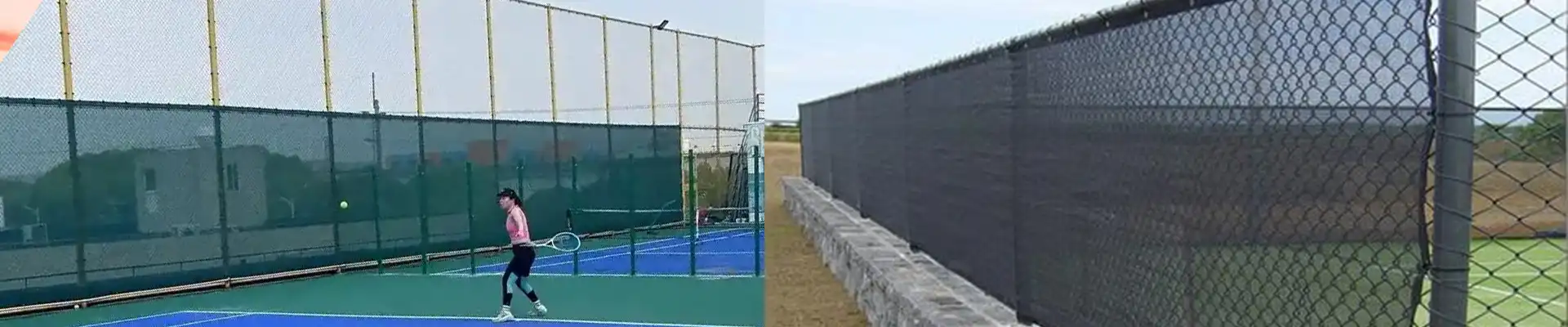
Golf barrier netting is an essential protective system designed to stop high‑speed golf balls and prevent them from leaving a designated area. Whether installed on a driving range, around a private backyard, or inside an indoor simulator, this netting safeguards people, vehicles, buildings, and nearby property. Beyond security, it clearly defines the playing boundary, helps players focus on their swing, and improves the overall practice experience.
Choosing the right golf barrier netting requires understanding the materials, mesh sizes, strength ratings, and installation methods. This guide covers everything you need to know to make an informed decision.
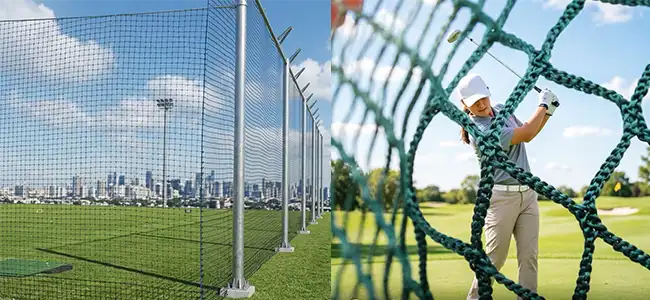
The primary purpose of golf barrier netting is risk reduction. Stray balls can cause serious injury or expensive damage. By intercepting balls before they leave the intended zone, the netting creates a safe environment for golfers, bystanders, and adjacent infrastructure. It also allows golf facilities to operate in densely populated areas without liability concerns. For homeowners, it turns a backyard into a functional practice area without disturbing neighbours.
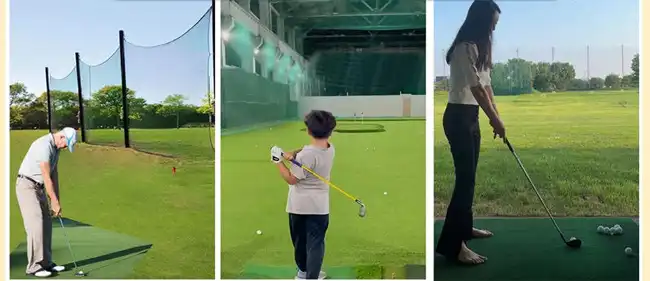
The longevity and performance of a barrier net depend heavily on its material. Three options dominate the market, each with distinct characteristics.
Nylon is prized for its exceptional tensile strength, elasticity, and abrasion resistance. It absorbs impact energy well, making it ideal for high‑frequency use in indoor driving ranges and professional training centres.
Polyethylene offers a lighter, more water‑resistant alternative. It resists chemicals and moisture, and its lower cost makes it attractive for large‑scale outdoor projects. While polyethylene nets are adequate for many applications, they generally do not match the brute strength of premium nylon, so they are often chosen for budget‑conscious sites where impact frequency is moderate.
Polyester combines high strength with low stretch and outstanding resistance to ultraviolet radiation and weather extremes. This stability ensures the net maintains its tension and shape over time, which is crucial for professional practice environments. Many premium polyester nets are manufactured with built‑in UV inhibitors, protecting each monofilament from the inside out and preserving the net’s breaking strength for years.
When evaluating golf barrier netting, several technical parameters directly affect safety and durability.
Mesh size is the most important specification. Common openings are 5 centimetres by 5 centimetres, 2.5 by 2.5 centimetres, or approximately 2.5 centimetres (one inch). A larger mesh may allow a ball to pass through, while a very fine mesh adds weight and cost without improving safety. The right choice depends on the typical ball speed and distance from the net.
Breaking strength, measured in pounds, indicates the net’s impact resistance. Professional‑grade nets often rate at 60, 100, or even higher pounds. Higher values mean better protection against powerful drives.
Twine thickness, such as 3 millimetres, influences both durability and weight. Thicker twine withstands more abrasion but increases the overall mass and price. Thinner twine is lighter and easier to handle but may wear out faster under heavy use.
Dimensions vary widely. Small home panels of 10 by 10 feet are common, while commercial rolls can reach 30 by 100 feet or more. Custom sizes are also available for unusual layouts.
Colour typically comes in black or green, chosen to blend into the landscape and reduce visual distraction.
Correct installation ensures the net performs reliably and lasts its full expected lifespan. Three main methods are widely used.
Soft installation uses reinforced border ropes threaded with steel cables. The cables are tensioned between posts, allowing the net to flex and absorb shock. This approach is popular for temporary or semi‑permanent setups.
Frame‑mounted systems involve stretching the net over a pre‑built metal framework and securing it with specialised clips or ties. This gives a taut, professional finish and is common for indoor simulators and permanent outdoor cages.
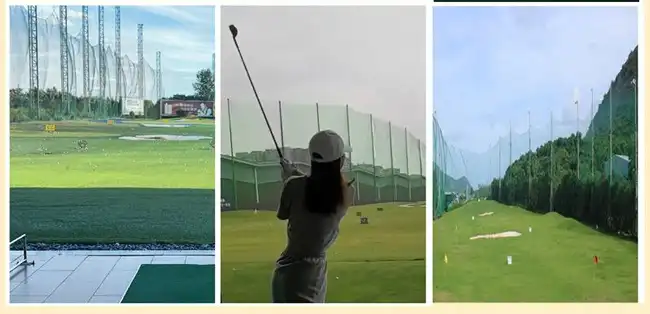
Full enclosure systems for large driving ranges often include dedicated guy ropes and ground anchors. These improve wind resistance and prevent the net from sagging or tearing during storms. Proper tensioning is critical; too loose, and the net may catch balls inefficiently; too tight, and it may stress the fibres and shorten its life.
With proper care, a high‑quality golf barrier net can serve effectively for five to seven years. Routine inspection for tears, loose stitching, or worn spots is advisable. Cleaning debris off the mesh prevents unnecessary weight and abrasion. Most importantly, removing the net during winter or extended periods of non‑use dramatically extends its service life, as it avoids prolonged exposure to harsh weather and UV rays.
Selecting the optimal golf barrier net involves balancing your specific application, budget, and performance expectations. For indoor commercial ranges, nylon or polyester with high breaking strength and fine mesh is recommended. For large outdoor areas, polyethylene offers a cost‑effective solution, provided the impact frequency is manageable. For residential backyards, a medium‑grade polyester net with UV protection gives a good trade‑off between durability and price.
Can golf barrier netting be used indoors?
Absolutely. Indoor simulators and practice bays commonly use nets to contain balls, and materials like nylon are especially suitable because they are not exposed to sunlight or rain.
Does mesh colour affect visibility?
Black and green are preferred because they reduce glare and help golfers track the ball flight clearly against the net background.
Is it necessary to replace the net after a tear?
Small tears can sometimes be repaired with netting patches, but significant damage or multiple holes require replacement to maintain safety standards.
Golf barrier netting is a vital investment for any facility or individual serious about safety and practice quality. By understanding the differences in material, mesh, strength, and installation, you can choose a system that offers reliable protection, long service life, and excellent value. Whether you are outfitting a professional driving range or a home practice station, the right netting gives peace of mind and lets you focus on improving your game.
Contact: +8615075482313
WhatsApp: +8615075482313
Email: yingruichina@gmail.com
Add: 100 meters west of Xiliangwa Village, Anping County, Hebei, China
We chat