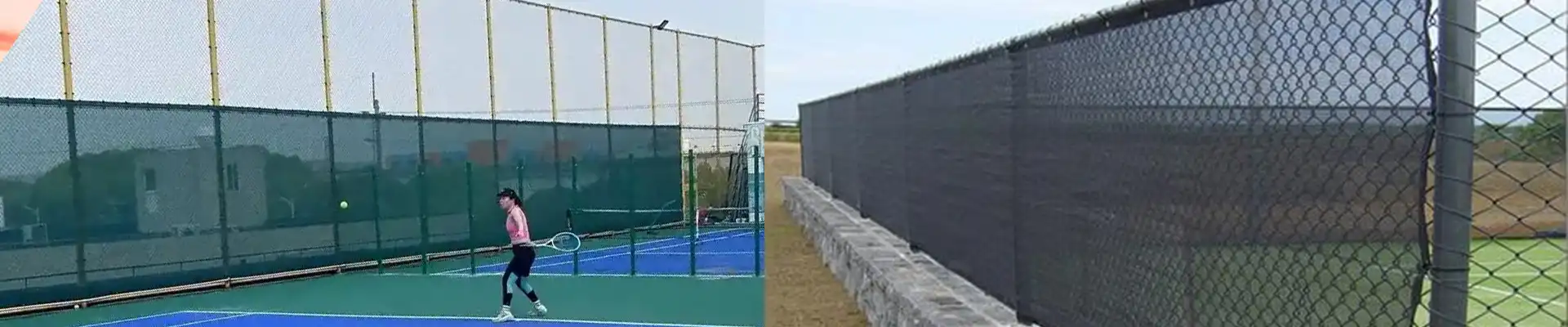
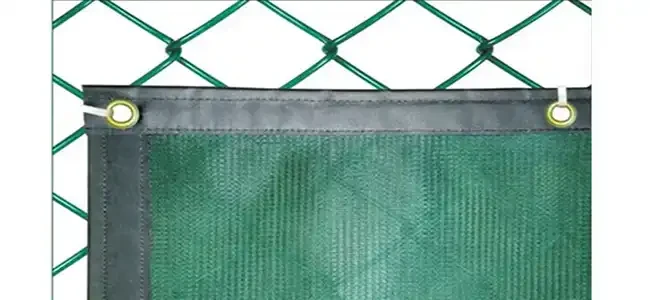
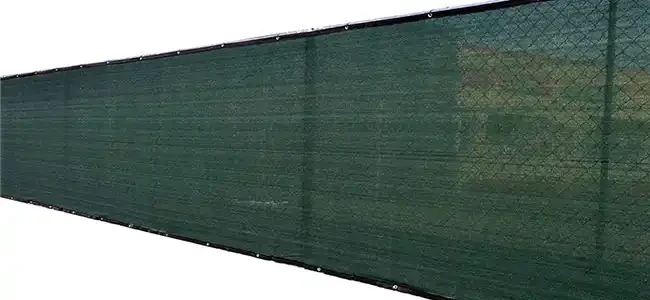
Privacy screen fabric is an add-on accessory specifically designed for chain link fences (diamond mesh wire fences). It is typically a roll of flexible, woven material made of high-density polyethylene (HDPE), polyester, or PVC-coated polyester. The fabric is attached to the existing chain link fence using UV-resistant cable ties or clips, instantly turning a transparent fence into an opaque visual barrier.
Key Features
Quick to install – No need to replace the existing fence; privacy is achieved immediately.
High opacity – Common light blocking rate: 85 to 95 percent. The interior is hard to see from outside while still allowing air circulation.
Lightweight – Adds almost no extra load to the fence structure.
Wind-permeable – Micro-holes let wind pass through, reducing the risk of tearing or wind noise.
UV-stabilised – Quality fabrics resist fading and embrittlement under prolonged sunlight.
Various colours – Common options: black, dark green, beige, grey, etc., to match the surroundings.
Typical Specifications
Material: HDPE (high-density polyethylene), polyester, or PVC-coated polyester
Weave type: Plain weave or knitted (similar to shade netting)
Opacity: 85 to 95 percent
Weight: 150 to 300 grams per square metre
Tensile strength: Warp at least 800 N/5cm, weft at least 600 N/5cm
Temperature range: -30 degrees Celsius to +70 degrees Celsius
Service life: 2 to 5 years (depends on UV exposure and climate)
Common widths: 1 metre, 1.2 metres, 1.5 metres, 1.8 metres, 2 metres
Common lengths: 10 metres, 20 metres, 25 metres, 50 metres (in rolls)
Installation Method
Step 1: Clean the fence – Remove any sharp wire ends or debris from the chain link fence.
Step 2: Unroll and position – Stretch the privacy fabric over the section of fence to be covered.
Step 3: Temporary fixing – Use clips or tape at the corners to hold the fabric in place.
Step 4: Secure with ties – Use UV-resistant nylon cable ties or special clips every 30 to 50 centimetres along the mesh. Do not overtighten.
Step 5: Join multiple rolls – Overlap the fabric by 5 to 10 centimetres and use two rows of ties.
Step 6: Finish edges – Use plastic edging or rope along the top and bottom to prevent wind damage.
Note: One person can install 10 to 20 metres of fence in about 1 to 2 hours.
Advantages
Low cost – Much cheaper than aluminium slats or wooden panels.
Very fast to install – No special tools required; a utility knife and cable ties are enough.
Removable – Cut the ties to remove the fabric without damaging the fence.
Provides shade – The dense fabric reduces direct sunlight and lowers the temperature behind the fence.
Effective visual privacy – Blocks casual views while still allowing some light to pass through.
Suitable Applications
Residential backyards – Quick privacy solution, especially for rented properties or temporary use.
Open balconies and patios – Blocks neighbours view without blocking the breeze.
Construction sites – Temporary screening, dust control, and hiding messy materials.
Temporary event fences – For sports events, fairs, concerts, etc.
Schools and kindergartens – Reduces outside distractions; the soft fabric is safer for children.
Buying Guide
Measure your fence – Know the height and length. Choose a fabric width that is slightly larger than the fence height (to allow rolling at the edges).
Check weight and density – Higher weight generally means better thickness and opacity. 200 grams per square metre or above is recommended.
Look for UV protection – Choose products labelled UV-stabilised or anti-UV.
Mesh type – For best privacy, choose a small-hole plain weave (like canvas texture). Knitted large-hole fabrics provide more shade but less privacy.
Quality of ties – Make sure the included cable ties are also UV-resistant; ordinary ties will crumble within months.
Maintenance and Replacement
Routine – Hose down the fabric once a month to remove dust. Check for leaves caught between the fabric and the fence in autumn and winter.
Repair – Small holes can be patched with outdoor repair tape applied to both sides. For large damage, replace the affected section.
Replacement interval – Generally replace the fabric every 2 to 3 years, along with the cable ties.
Summary
Privacy screen fabric is the fastest, lowest-cost, and most reversible way to add privacy to a chain link fence. It trades some durability and premium appearance for great flexibility and ease of use. It is an ideal choice for temporary, seasonal, or budget-conscious privacy needs. For permanent, highly durable solutions, other options such as aluminium slats or solid panels may be considered.
Contact: +8615075482313
WhatsApp: +8615075482313
Email: yingruichina@gmail.com
Add: 100 meters west of Xiliangwa Village, Anping County, Hebei, China
We chat