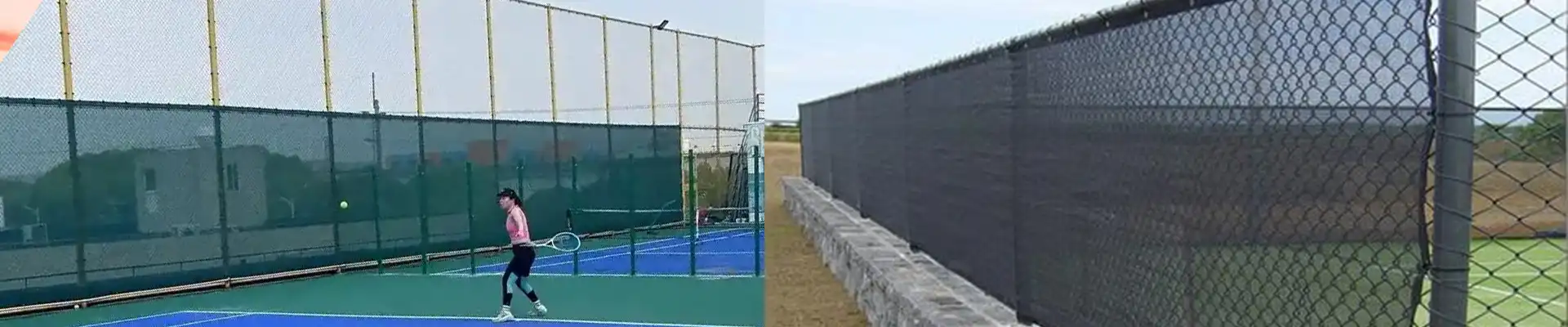
Stadium netting are important safety equipment that prevent balls from flying out and injuring spectators. They are widely used in football fields, baseball stadiums, tennis courts, golf driving ranges, and many other sports venues. Among the various materials available, highdensity polyethylene (HDPE) and nylon are the two most common choices, and each has distinct performance characteristics and suitable applications.
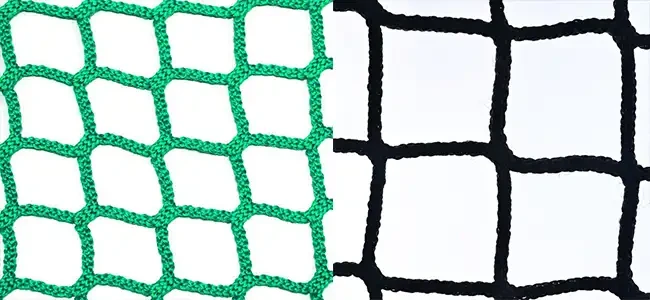
HDPE Stadium netting are made from environmentally friendly, non toxic HDPE resin, combined with antioxidant additives and manufactured through a refined warpknitting process. The material’s linear molecular chains form crystalline regions that give it high tensile strength; for example, a net with 995 effective content can achieve a breaking load of 260 kN. The main advantages of HDPE include excellent weather resistance, as the material has natural ultraviolet resistance and can last five to eight years outdoors without cracking or becoming brittle under sunlight. Over its service life, HDPE Stadium netting lose only about ten percent of their strength, making them ideal for long term outdoor use. HDPE does not absorb water, so the net does not sag and requires little adjustment during use. Its colours remain permanent and do not fade. It also has strong resistance to acids, alkalis, and mildew, outperforming nylon in corrosive environments. The net is lightweight, flexible, and stable across temperatures from minus thirty degrees Celsius to sixty degrees Celsius. Additionally, HDPE is nontoxic and recyclable. Typical applications for HDPE protective nets include perimeter barriers for football fields, tennis court divider nets, foul ball screens for baseball stadiums, and golf driving range enclosures. For outdoor venues in hot or snowy climates, HDPE is the preferred material.
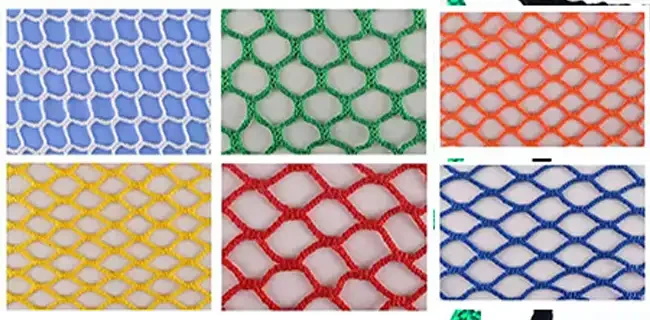
Nylon Stadium netting are made from polyamide fibres, typically nylon 6 or nylon 66. Their unique molecular structure gives them outstanding physical properties. Nylon 6 offers good toughness and impact resistance, while nylon 66 provides higher strength and heat resistance. The key strengths of nylon are its very high initial breaking strength, which exceeds that of HDPE, and its excellent elasticity and energy absorption. When a highspeed ball such as a baseball, softball, or golf ball strikes a nylon net, the fibres stretch and dissipate impact energy rather than rebounding rigidly. This makes nylon particularly effective for cushioning highvelocity impacts. Nylon also has superior abrasion resistance, making it suitable for scenarios with frequent repeated impacts. It resists corrosion, acids, alkalis, and high temperatures, and it has good electrical insulation and a low friction coefficient. However, nylon has some limitations. It absorbs moisture, so after rain it becomes heavier and sags, requiring frequent retensioning. For outdoor use, its protective coating gradually wears away, leading to shrinkage, fading, and eventual degradation. Without ultraviolet treatment, nylon deteriorates quickly under direct sunlight. Therefore, nylon protective Stadium netting are better suited for indoor environments or highimpact applications, such as indoor baseball batting cages, squash court screens, and highintensity training enclosures. In caged football fields, the top net is often made of nylon rope. For outdoor nylon Stadium netting, it is essential to use products that have been treated with ultraviolet inhibitors or tar coatings.
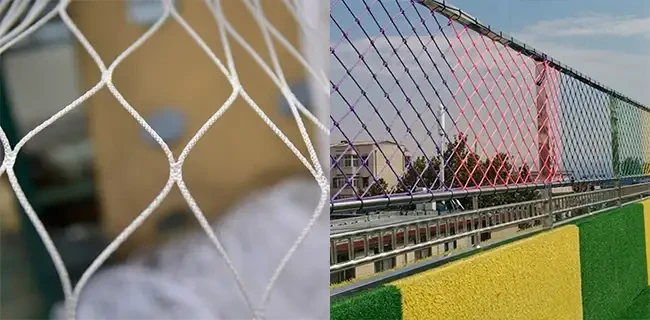
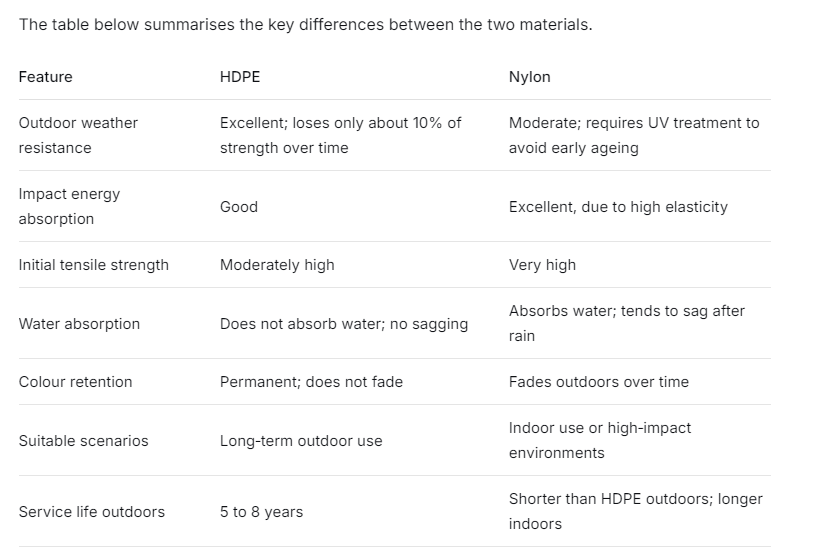
When comparing HDPE and nylon, several key differences stand out. For outdoor weather resistance, HDPE is excellent, losing only ten percent of its strength over time, whereas nylon is only moderate and requires ultraviolet treatment to avoid early ageing. For impact energy absorption, HDPE is good, but nylon is exceptional due to its elasticity. In terms of initial tensile strength, nylon is very high, while HDPE is moderately high. HDPE does not absorb water and does not sag, but nylon absorbs water and tends to droop. Colour retention is permanent for HDPE, while nylon fades outdoors. Consequently, HDPE is best for longterm outdoor use, and nylon is better for indoor or highimpact settings. HDPE typically lasts five to eight years outdoors, whereas nylon lasts longer indoors but shorter outdoors. Maintenance costs are low for HDPE and higher for nylon because of the need for frequent adjustments.
For the vast majority of outdoor sports stadiums, HDPE is the better choice. It offers the best overall balance of weather resistance, low water absorption, light weight, and costeffectiveness. In particular, under strong direct sunlight, HDPE withstands repeated ultraviolet exposure while remaining flexible and resilient. For indoor highimpact training facilities, such as baseball batting cages or squash courts, or for specific parts like the top net of a caged football field, nylon is more appropriate because of its superior elasticity and energy absorption. If nylon nets must be used outdoors, it is critical to verify that they have been adequately treated against ultraviolet radiation.
Contact: +8615075482313
WhatsApp: +8615075482313
Email: yingruichina@gmail.com
Add: 100 meters west of Xiliangwa Village, Anping County, Hebei, China
We chat