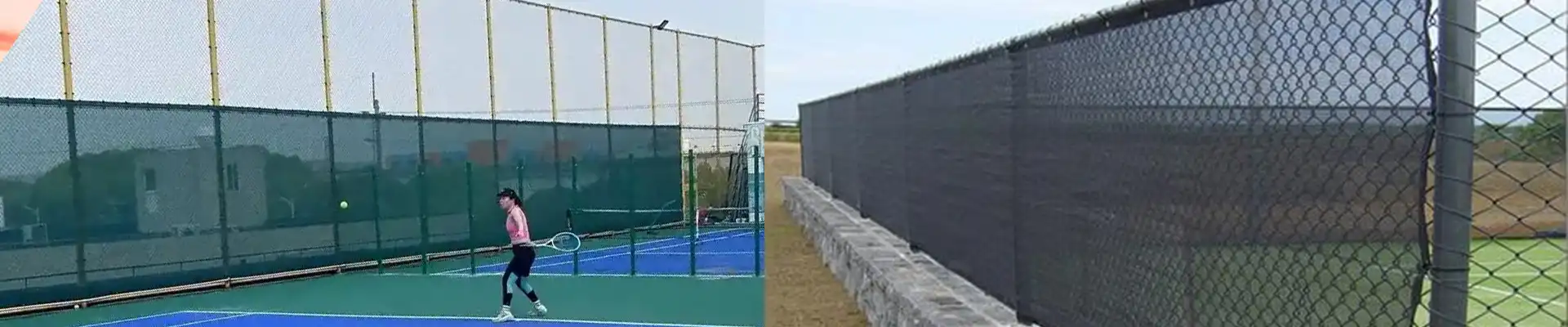
Introduction to Green Shade Net
Green shade net, commonly referred to as shade net or green net, is one of the most widely used covering materials in agriculture, horticulture, and construction sites.
Simply put, it is a woven fabric made from high-density polyethylene (HDPE) as the raw material, with added UV stabilizers, through a process of drawing filaments and weaving. Because green is the most common color, it is often simply called “shade net”.
Sun shading and cooling: This is the primary function. By reflecting and absorbing part of the sunlight, it effectively lowers the temperature under the net, typically reducing ground surface temperature by 4–8°C.
Light regulation: Depending on the needs of different crops, nets with different shading rates can be used to control photosynthesis.
Humidity reduction and rain protection: It mitigates the direct impact of heavy rain on soil and crops, and also reduces some evaporation of water.
Wind resistance and durability: HDPE material is lightweight yet strong, with some elasticity, making it resistant to tearing. With the addition of UV stabilizers, it typically lasts 3–5 years outdoors.
Shading rate: Ranges from 35% to 95%. In agricultural production, 50%–75% is the most common (e.g., leafy greens use lower shading rates, while shade-loving flowers or edible fungi use higher rates). For construction dust control, high-density nets with over 80% shading are often used.
Weight per unit area (gsm): Measured in grams per square meter (g/m²). The higher the weight, the thicker and more durable the net tends to be, and generally the higher the shading rate.
Width: Common widths include 1 m, 2 m, 4 m, 6 m, 8 m, 10 m, etc., which can be customized according to greenhouse dimensions or coverage area.
Agricultural planting: Summer cultivation of vegetables, flowers, Chinese medicinal herbs, edible fungi, etc.; in winter and spring, used for heat preservation and frost protection.
Animal husbandry: Shading and cooling for livestock, poultry, silkworms, etc., improving the living environment of animals.
Construction sites: Covering sand, gravel, and soil piles to prevent dust (meeting environmental protection requirements); also used as safety fencing to prevent debris from falling.
Home gardens and patios: Building shade structures, covering fish ponds, protecting balconies, etc.
Advantages: Inexpensive (about 1–5 RMB/m²), light and easy to lay out, can be rolled up and reused, water-permeable and breathable without waterlogging.
Limitations: In hot and humid weather, if not installed properly (for example, placed directly against greenhouse film), it may cause disease or heat damage due to poor ventilation.
Look at the color: Standard agricultural green net has a uniform color and no pungent odor. If the color is too dark or blackish, it may be made from recycled material and will have poor durability.
Feel the texture: High-quality net filaments are firm and resilient, with neat weaves. Inferior nets are floppy and tear easily under tension.
Check the parameters: Clearly specify the shading rate and weight per unit area to the seller (e.g., “I need a 6-needle 75% shade net”).
Correct installation: Most importantly – the shade net must never be placed directly on the greenhouse film! It should be kept at least 20 cm away from the film to create an insulating air layer, which is essential for effective cooling and ventilation.
Summary: The green shade net is a low-cost, high-efficiency tool for environmental regulation, particularly suitable for summer agricultural production and dust control at construction sites. When selecting, pay attention to material (virgin HDPE), shading rate, and weight per unit area. During use, ensure proper spacing for ventilation to achieve the best results.
Contact: 15075482313
WhatsApp: 15075482313
Email: yingruichina@gmail.com
Add: 100 meters west of Xiliangwa Village, Anping County, Hebei, China
We chat