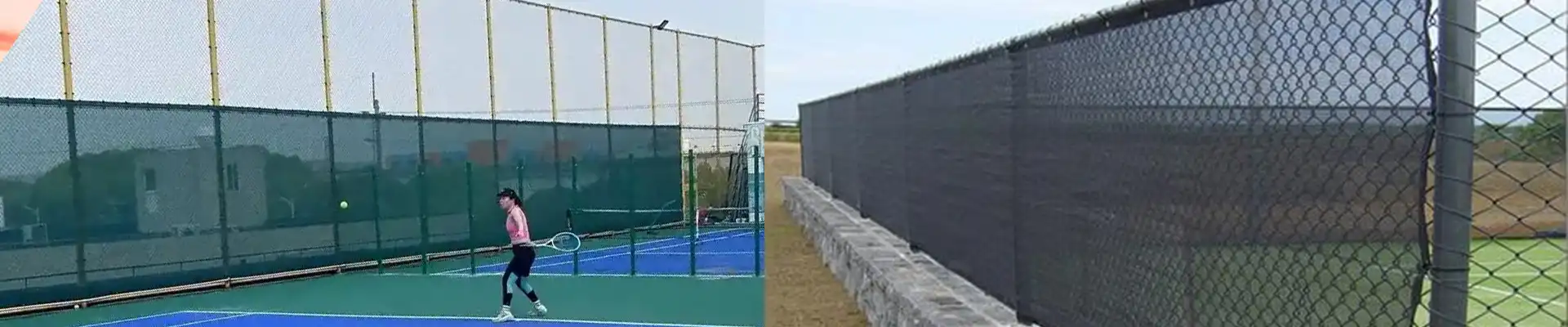
Black shade netting is a widely used protective covering material in modern agriculture and horticulture. It is especially effective in hot summer conditions due to its excellent shading and cooling properties.
Definition and Material
Black shade netting, also known as shade cloth, is mainly made of High-Density Polyethylene (HDPE) with added anti-aging and UV-stabilizing agents. It is woven into a mesh structure. The netting is lightweight, strong, and typically lasts 3 to 5 years; high-quality products can last 5 to 10 years. Note that cheaper nets made from recycled or reclaimed materials usually last less than a year.
Key Functions and Features
It works by physically creating a favorable microclimate and offers the following core functions.
Effective shading and cooling. This is the primary function. It can block 30 to 95 percent of sunlight. In hot summer, surface temperature can be reduced by 5 to 12 degrees Celsius (9 to 22 degrees Fahrenheit). Studies show that under black shade netting, average daily air temperature drops by about 1.4 degrees Celsius, and soil temperature by about 2.1 degrees Celsius.
Physical protection against weather and pests. It reduces the impact of heavy rain on soil and crops, prevents water runoff and soil compaction, and provides protection against hail and strong winds, minimizing mechanical damage to plants.
Moisture retention and frost protection. By reducing air movement, it effectively lowers water evaporation from the ground and increases relative humidity by 13 to 17 percent. In winter and spring, it also offers some frost protection.
Pest and bird deterrence. The physical barrier helps block certain pests and birds, reducing the need for pesticides.
Main Applications
Black shade netting is used in many areas.
Agriculture. Widely used for growing vegetables, flowers, mushrooms, tea, ginseng, and other cash crops, especially during seedling and summer cultivation. It is very common for leafy greens such as pak choi, celery, spinach, and coriander.
Aquaculture. Provides shade over fish ponds and shrimp ponds in summer, effectively controlling algae growth and lowering water temperature for a better living environment.
Gardens and patios. Used for building shade structures over patios, balconies, and protecting potted plants or valuable garden plants such as Japanese maple from sunburn.
Other uses. Shading and cooling for poultry houses, temporary protective nets in parking lots or construction sites, etc.
Selection and Usage Tips
Choose the right shade rate. This is key. For shade-tolerant, heat-resistant vegetables, choose higher shade rates (75 to 90 percent). For sun-loving plants like tomatoes and peppers, choose lower shade rates (35 to 50 percent) to avoid excessive shading that can cause leggy growth and lower yields.
Check material quality. High-quality nets are usually sold by area. They feel soft, have a smooth and flat surface, and are flexible with good luster. Low-quality nets are often sold by weight; they feel rough, have thick stiff threads, a pungent smell, and a short lifespan.
Proper installation methods.
Allow ventilation. Do not lay the net directly on the greenhouse film. Maintain a gap of at least 20 centimeters to create an air layer that carries away heat.
Apply flexibly. Avoid covering all day long. The correct practice is to cover only during the hottest midday hours (for example, 10:30 a.m. to 2:30 p.m.) on sunny days. Remove the net when light is weak (mornings, evenings, cloudy days) to ensure normal photosynthesis.
Cooling reference. Generally, when the temperature inside drops below 30 degrees Celsius, the shade net can be removed.
Summary
In summary, black shade netting is an indispensable and practical tool for summer agricultural production. By selecting the appropriate specifications based on actual needs and crop characteristics, and using it correctly, one can significantly improve its effectiveness and create a better growing environment for crops.
Contact: 15075482313
WhatsApp: 15075482313
Email: yingruichina@gmail.com
Add: 100 meters west of Xiliangwa Village, Anping County, Hebei, China
We chat